Turning the Tide: How Ghana Made Childhood Lead Poisoning a National and Regulatory Priority

Abdulai Suraji lives in Mamobi, in the greater Accra region, and he never knew about the risk of heavy metals like lead in the food and products he and his family uses regularly.
“We would buy cereals, spices like turmeric, and even traditional products like kohl without questioning their safety,” said Suraji, “But after the FDA, working with UNICEF, started this assessment and awareness campaign, things began to change."
Since 2020, UNICEF Ghana has partnered with government institutions, international organizations and technical experts to transform childhood lead poisoning from an under-recognized issue into a national regulatory priority. Initially, the focus was on building awareness. Through posters, community outreach, and social media campaigns, the issue grew in prominence nationally.
Filling Data and Knowledge Gaps
To strengthen call for action, UNICEF Ghana conducted a blood lead level (BLL) study of 3,225 children. The findings were alarming: 1,725 children (53.5%) had BLLs at or above the WHO level of concern of 5 µg/dL, and 22 children had levels exceeding 45 µg/dL — requiring urgent medical attention. Suspected exposure sources included used lead-acid battery recycling sites and traditional cosmetics such as kohl used as eyeliner.
These findings helped demonstrate the scale and urgency of the problem. The awareness campaign ultimately reached more than 150,000 caregivers and 22,000 schoolchildren with information on preventing lead exposure.
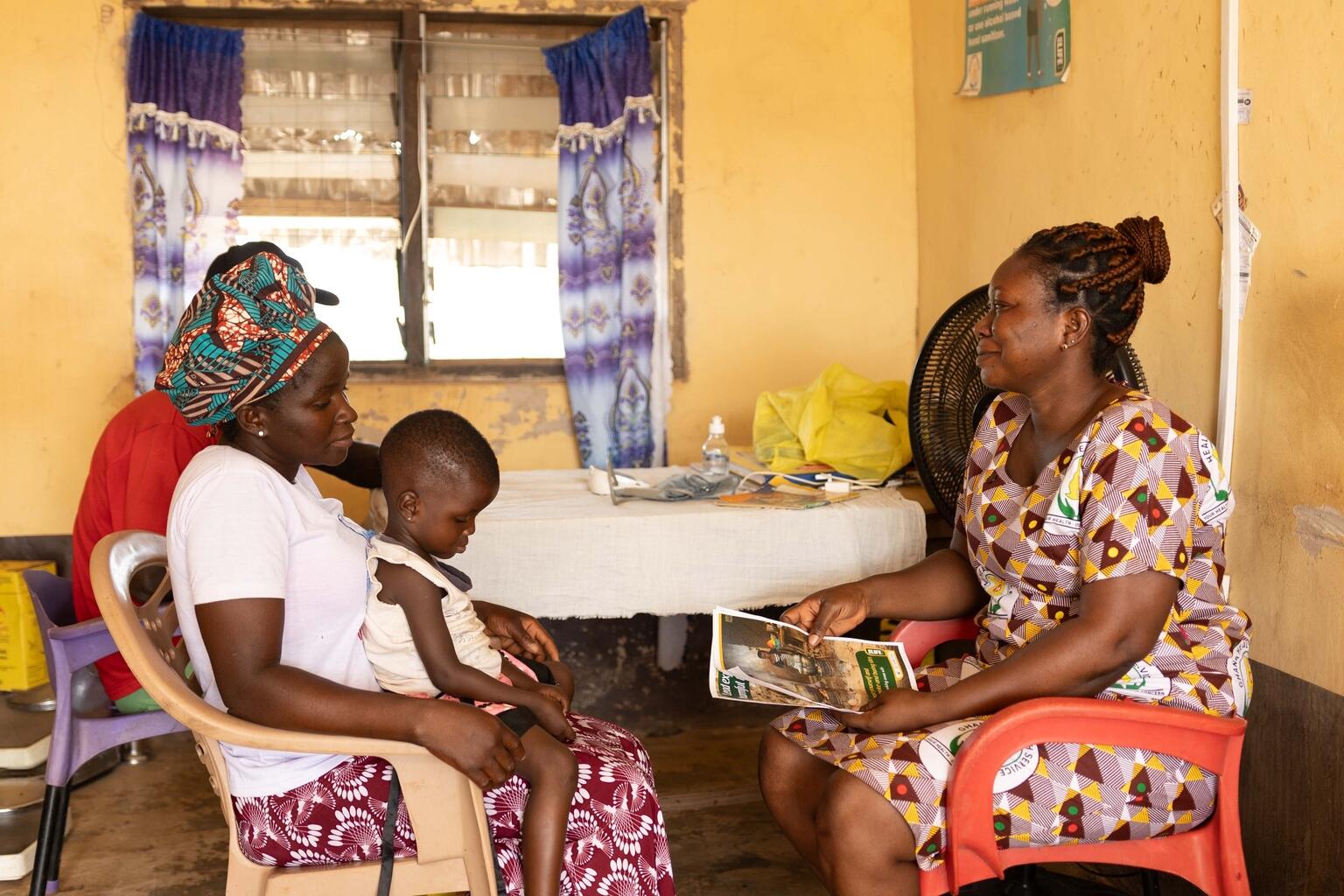
Agnes holds her daughter Rhoda who has an eye infection while she speaks with the community health worker Sophia, who is explaining that Chilo contains lead, a poisonous element that has adverse effects on children and pregnant women. Agnes had been applying chilo on the eyes of her daughter in an attempt to cure the infection. Sophia received UNICEF training on childhood lead poisoning. Eventually, Agnes took Rhoda to Zabzugu Hospital where she received treatment and support to mitigate lead poisoning.
To strengthen systems, more than 1,500 health workers have been trained since 2023 on the prevention and clinical management of lead poisoning using WHO guidelines. Chemical poisoning, including lead exposure, has now been integrated into the Ghana Health Service health information system — an important step toward sustained monitoring and response.
Government Lead Assessments Paves Way for Change
In 2024, the Environmental Protection Agency (EPA) conducted its first-ever assessment of lead and other heavy metals in ambient air across Greater Accra, including roadside, industrial and residential areas, as well as three used lead acid battery (ULAB) recycling facilities and surrounding communities. The study found that lead levels around ULAB sites exceeded acceptable limits, prompting the EPA to develop an action plan to strengthen regulation and enforcement. UNICEF Ghana also supported outreach to 30 paint manufacturers to raise awareness of the new national standards on lead in paint.
In 2025, the Food and Drugs Board Authority (FDA) completed its first-ever nationwide assessment of heavy metals in kohl eyeliner, skin-lightening creams and lotions, cereal mixes, turmeric and bentonite clay – National Report on Heavy Metals in Selected Products. These product categories were chosen based on market penetration, suspected or reported contamination and potential harm to human health. In total, 1,691 samples from across Ghana were collected. The FDA results were catalytic.
Select findings:
- Kohl products (kaji kaji) had the highest lead contamination, with alarmingly high failure rates — up to 100 per cent exceeded standards in the Upper East and Eastern regions.
- Turmeric — a staple spice — failed safety limits for lead in more than 42 per cent of samples, especially in Greater Accra and Central regions.
- Cereal mixes showed a 29 per cent cadmium failure rate, with regional disparities.
- Bentonite clay (ayilor), which is consumed by pregnant women, also showed significant lead contamination.
Actions being taken:
- Stronger regulatory oversight of high-risk products, including increasing controls and port checks for kohl and turmeric as most are imported into Ghana.
- FDA introduced new regulatory requirements to include cadmium in the testing of cereal mixes, as well as other safety testing and recall mechanisms.
- Engagement with producers and market stakeholders — such as small-scale bentonite clay suppliers and nontraditional regulators like market queen mothers and community leaders — to adopt safer practices.
- Nationwide public awareness campaigns to empower communities with knowledge about the risks of heavy metals.

The findings from the nationwide heavy metals survey brought to light the need to revise standards and strengthen border control for certain regulated products. It is imperative that consumers products are continuously monitored to safeguard unsuspecting consumers from contaminants like lead, which can negatively impact health and safety.
Roderick K. Daddey Adjei, Deputy Chief Executive Officer (Food Division) of FDA
These assessments were conducted in partnership with UNICEF, enhancing national laboratory and institutional competencies, regulatory review and heavy metal analysis.
“When I go to buy food for my family, I feel reassured knowing that the FDA is actively testing and removing contaminated products,” said Suraji, “The recalls we heard about made us realize the risks were real, but also that action was being taken to protect us. I feel safer feeding my family, and I trust the system more because I can see that the FDA is not just regulating on paper, but actually working to protect public health.”
From Vision to Action
Building on the immediate government interventions following these assessments, stakeholders are now developing a comprehensive national strategy to eliminate lead from consumer products. This initiative transitions from reactive measures to a systemic regulatory framework, integrating child-specific standards into the lifecycle of products like toys, cosmetics, and food packaging to ensure consistent monitoring, surveillance and enforcement. It will also provide manufacturers with the tools and oversight needed to tackle industrial sources of lead pollution.
Real Lives, Real Change
Beyond the policy and regulatory changes, a major lesson in Ghana is engaging the communities early and often. Many of these harmful practices are deeply rooted in culture and tradition, and eliminating the use of lead-containing substances, especially in households and among children, will take time and sustained effort. Engaging pregnant women, mothers, grandmothers and traditional leaders in open, respectful dialogue is essential to shifting norms and promoting safer practices.
Like in the case of Rhoda — a child whose eye infection led her mother to discover the dangers of a traditional cosmetic — reminds us behind the alarming statistics are real children and families that need protection.